
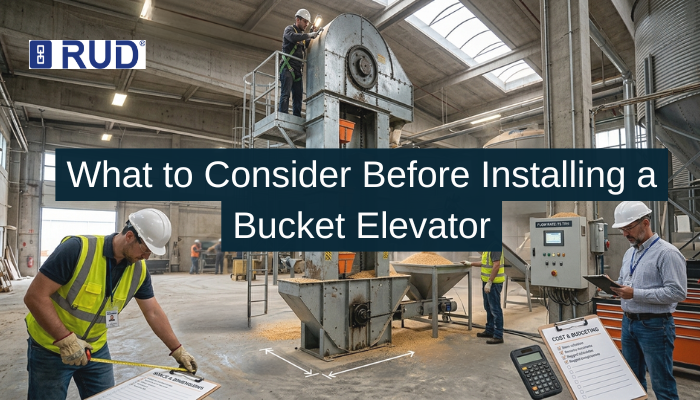
What to Consider Before Installing a Bucket Elevator
A bucket elevator installation needs careful thought around material type, discharge method, and how the system connects to your existing equipment. At RUD Australia, we design and manufacture bucket elevator systems for bulk material handling across mining, agriculture, and construction.
And we’ve noticed that many site teams run into unexpected downtime just weeks after commissioning. In other cases, fragile materials like grain, cereal, or popcorn come out damaged, which often points to setup or handling issues in the system.
So why does this keep happening, and what can you do about it? In this guide, we will help you spot these issues early and plan a better setup before installation begins.
Let’s start with the material you’re handling.
How Bulk Materials Determine Your Bucket Elevator Design
The material you plan to move can affect almost every part of your bucket elevator design. That includes the buckets, the belt, the discharge method, and how fast the system runs.
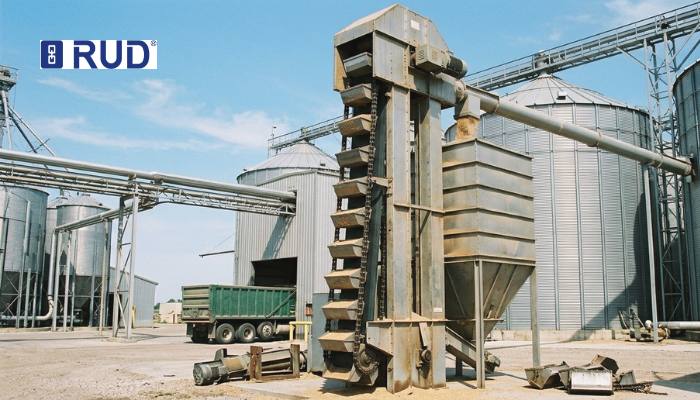
Here’s how to match your system to the job.
Why Bulk Materials Are The Starting Point
Many bucket elevator systems fail because teams don’t fully understand the material at the start. This is important because the weight, fragility, and flow behaviour of the material can directly affect how the elevator works over time.
Take light materials like popcorn or cereal, for instance. These need gentle handling to avoid breakage during transport. Heavy industrial loads, on the other hand, require stronger chains and steel buckets to manage the extra strain.
And if the material behaves differently, like sticky clay, abrasive sand, or free-flowing grain, you must also adjust the discharge method. This early planning can prevent costly issues and system failures later on.
Bucket Elevator vs. Bucket Conveyor
In many material handling setups, the choice between a bucket elevator and a bucket conveyor will depend on how products need to move through the site.
A bucket elevator lifts materials vertically using buckets attached to a belt or chain. As the buckets move around two pulleys, the system will carry bulk materials to higher levels (which makes it useful if your floor space is limited).
A bucket conveyor works a bit differently. Instead of lifting straight up, it moves materials horizontally or at an incline. Facilities like grain plants, processing units, or storage sites often use both systems together to manage different movement needs.
Choosing The Right Buckets For The Job
Steel buckets suit heavy, abrasive materials in industries like mining and cement production. They’re also highly durable and can handle these tough operating conditions without wearing out quickly.
On the other hand, for food processing or fragile materials, specialised buckets work better. These are often made from moulded polymer or stainless steel, which provides gentler handling during transport. As a result, you get less product breakage and better hygienic standards for cereal, grain, and snack production.
Getting The Bucket Belt Right
The bucket belt connects the buckets to the pulleys and carries the load through the entire system. This means you need to consider the load capacity, wear resistance, and material compatibility when choosing the right belt.
However, not all belts will suit every application. For example, a lighter-duty belt may work well for grain or cereal, but it can fail under the extra load of heavy materials like cement or ore.
That’s why we recommend matching the belt to both the material and the operating conditions. This will also help the system run more reliably and last longer.
Best Practices for Bucket Elevator Installation in Industrial Settings
A well-planned industrial equipment installation sets your bucket elevator up for reliable performance over the long run. And the decisions you make during installation can directly affect how the system performs for years to come.
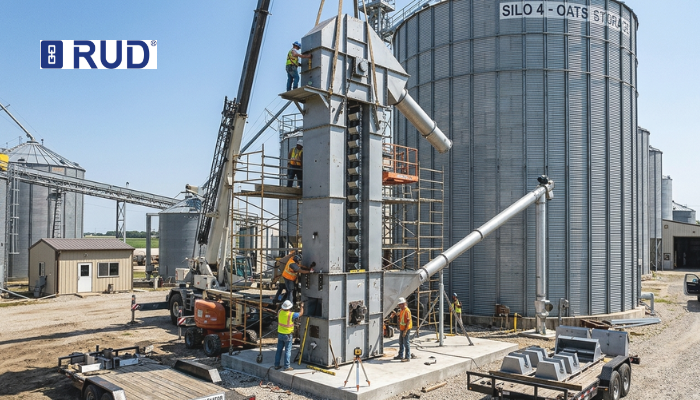
So let’s look at what you should focus on.
Why Installation Planning Is So Important
Early decisions during installation can directly affect the long-term performance, maintenance needs, and operating costs of your bucket elevator.
The problem is that installation often gets rushed or handed off without enough thought. When that happens, issues like belt misalignment or poor discharge spout positioning (leading to blockage or spilling) tend to happen within the first few weeks of operation.
However, a bit of extra time spent on planning upfront can save you from any expensive repairs and downtime later on.
Integrating With Your Bulk Material Handling System
Since your bucket elevator doesn’t operate on its own, it needs to connect smoothly with other parts of your facility, including conveyors, silos, and processing lines. If you don’t plan these connections properly from the start, you can face material loss, slowdowns, and uneven flow across different parts of the system.
In fact, we have seen that integration issues are one of the most common causes of underperformance. This often happens when the elevator connects with downstream equipment that runs at a different flow rate or handles a different material type.
Preparing Your Site For Installation
Before the elevator arrives on site, you need to make sure your facility is ready to support it. That means that the supporting steel structure must be strong enough to handle the combined weight of the elevator, the buckets, and the bulk materials it’ll lift.
Next, focus on vertical alignment. If the elevator isn’t perfectly vertical, the belt can drift to one side and wear unevenly over time. Even a slight tilt in the structure can cause the belt to rub harder on one side, which can lead to faster wear and alignment problems.
And don’t forget to leave enough clearance around the boot and head sections so technicians can access them safely for maintenance.
Balancing Speed With Material Safety
Higher speeds will give you greater throughput and generate stronger centrifugal force at the discharge point. This setup works well for free-flowing bulk materials like sand or pellets, which can handle fast movement without breaking or getting damaged.
Lower speeds, however, are better suited for fragile materials like cereal, grain, or popcorn. Its slower movement will reduce product breakage and maintain quality. So the right speed will depend on what you are moving and how sensitive the material is to impact during transport.
Build A Bucket Elevator System That Lasts
So now you know what it takes to keep your bucket elevator running smoothly for years. You just have to make decisions early and make sure each step connects smoothly to the next.
Think of it as a chain. Your material type determines the design, and the design then guides how installation happens. In turn, the installation affects how easy or difficult maintenance will be later. This way, if you do each step right, the whole system will run better for longer.
We also advise focusing on durability since the components are constantly exposed to load and wear during operation. That’s why steel buckets and high-quality components are popular, as they hold up well in tough industries like mining, food processing, and grain handling. And just as important is easy maintenance access, which can keep your bulk material handling system running with fewer interruptions.
If you are ready to get started, our team at RUD Australia can help you design a bucket elevator system that suits your specific needs.