The Small Business Guide to Eco-Friendly Food Packaging (Without Going Broke)
More states are passing packaging laws. More customers are asking “is this compostable?” And more small food businesses are stuck in the middle wanting to go green, but worried about the cost. This guide breaks down what actually matters, what the labels mean, and how to switch without wrecking your margins.
Why This Matters Now
Single-use packaging rules are spreading fast. Several states have passed producer-responsibility laws, and cities keep adding foam bans and composting requirements. Even where laws have not arrived yet, customers vote with their wallets. Surveys consistently show diners especially younger ones prefer businesses with visible eco efforts. Packaging is your most visible effort of all.
Decode the Labels First
The eco-packaging world is full of confusing terms. Here is the plain-English version:
Recyclable means the material can be processed again if your local facility accepts it and it is not soaked in grease. Greasy paper often cannot be recycled.
Biodegradable only means it breaks down eventually. There is no time limit. It is the weakest claim on the shelf.
Compostable means it breaks down into soil-safe material under composting conditions. Look for BPI certification that is the credible standard in North America.
PLA-lined means the grease barrier is made from plants instead of plastic. This is what makes a greasy tray compostable instead of trash.
The short version: “compostable with BPI certification” is the claim worth paying for. “Biodegradable” alone is mostly marketing.
The Grease Problem (And Its Solution)
Here is the challenge for anyone serving fries, burgers, or anything fried: grease ruins ordinary paper and disqualifies it from recycling. The old fix was a plastic (PE) lining leak-proof, but landfill-bound.
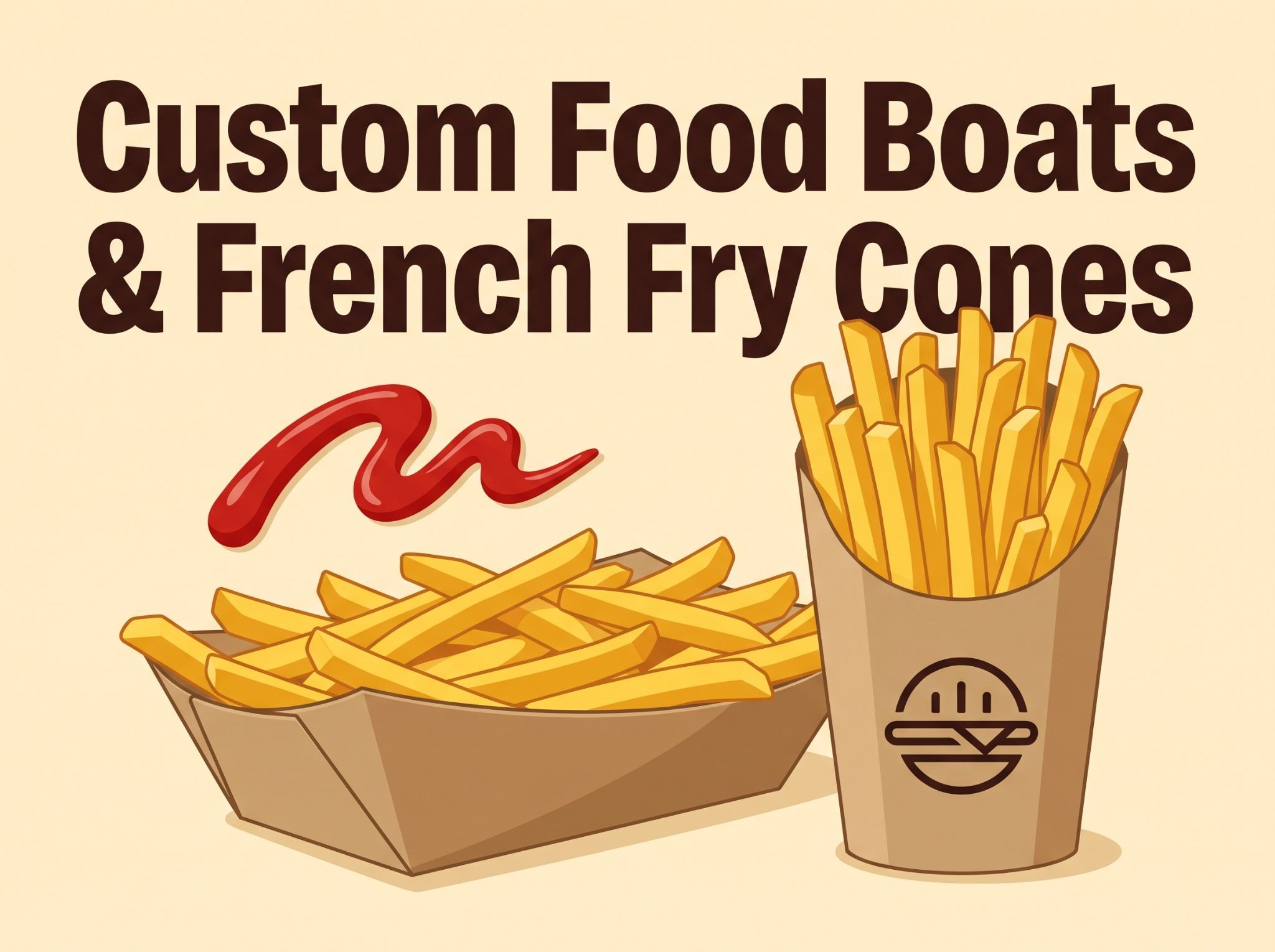
The newer fix is plant-based lining. Kraft trays and compostable food boats with PLA lining hold up to hot, oily food and still break down in commercial composting. They cost slightly more than plastic-lined versions, but the gap has narrowed as demand has grown, and many suppliers now offer them at small-business minimums.
How to Switch Without Breaking the Budget
Start with your highest-volume item. Do not replace everything at once. Switch the tray or container you use most that is where customers will notice and where bulk pricing helps most.
Buy in larger, less frequent orders. Eco materials get much cheaper per unit at volume. One big quarterly order usually beats monthly small ones.
Tell customers about it. A small printed line “This tray is compostable” turns your cost into a marketing asset. Businesses that stay silent about their eco switch pay for it twice: once at purchase, and again by missing the goodwill.
Skip the greenwashing traps. Do not pay extra for vague “earth-friendly” claims with no certification. Ask suppliers directly: is it BPI certified? What lining does it use? A good supplier answers in one sentence.
What About Cost, Really?
Expect compostable versions to run modestly higher than conventional ones the exact gap depends on size and volume. For a typical vendor, that might add a few cents per order. If a printed “compostable” line on your food packaging usa convinces even a small share of eco-minded customers to choose you over the stand next door, the math turns positive quickly.
The Bottom Line
Going green with packaging is no longer an all-or-nothing leap. Learn the labels, fix your greasiest item first, choose certified compostable over vague claims, and say it proudly on the packaging itself. Your customers are already looking for reasons to choose you. Give them one they can hold in their hands.